
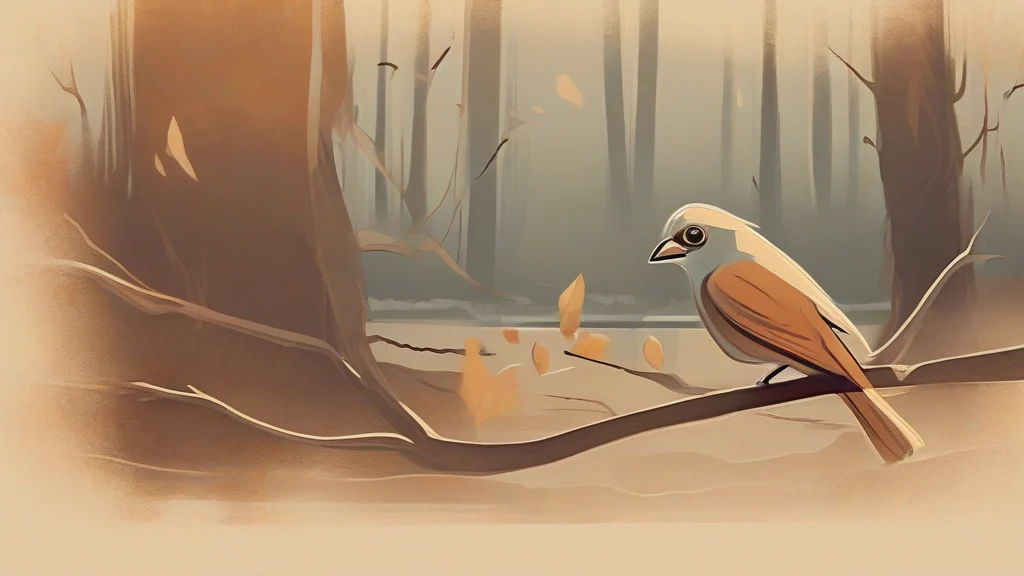
What does chitter mean?
Chitter is a verb describing the production of short, rapid, high-pitched sounds — the sort of nervous chattering made by sparrows, mice, or other small creatures. A hedge full of birds may be said to chitter as they fuss and flit about, and the word suggests agitation, excitement, or restlessness rather than melodious song. In older and chiefly regional British usage, chitter has a second sense: to shiver or tremble with cold, as though the body itself were making the same quick, jittery movements that the ear associates with chattering animals. The word is echoic in origin, formed in imitation of the very sounds it describes, which places it in the same expressive family as chatter and twitter. Today chitter is uncommon in casual speech but persists in literary prose and nature writing, where its precision and slight quaintness give descriptions of animal life a vivid, textured quality that more ordinary verbs like chirp cannot quite match.
verbTo make a series of short, high-pitched chattering sounds, as certain birds or small animals do; in dialect use, to shiver or tremble with cold.
- (of birds and small animals) to utter short, high-pitched, chattering sounds
- (chiefly British dialect) to shiver or tremble, especially with cold
"The sparrows chittered excitedly among the hedgerows at first light."
"Mice chittered behind the wainscoting all through the night."
"Standing on the frozen platform, she chittered until the train finally arrived."
Before it ever described a bird's call, 'chitter' was the word English dialects reached for when teeth knocked together from cold.
Reviewed by Deb Chak, Editor. AI-assisted content curated by RJS Tech Solutions LLP.
Etymology of chitter
Chitter is an echoic or imitative formation, coined in imitation of rapid chattering sounds, and is closely related to the similarly formed words chatter and twitter. It appears in English by around the early seventeenth century, with the bird-and-animal sound sense established early. The shivering sense developed later and survives mainly in Scottish and northern English dialect. Because the word arose from sound symbolism rather than borrowing, it has no true foreign cognates beyond its English echoic relatives.
How chitter is actually used
Primarily literary or dialectal; the bird-sound sense is the one most readers will recognize, while the shivering sense survives mainly in regional British speech. It carries no strong connotation of formality and is rarely used in everyday conversation.
Easily confused with chitter
Chitterlings are a dish made of pig's small intestines, whereas chitter is a verb describing a high-pitched chattering sound or shivering.
Twitter refers specifically to the light tremulous song of birds (and, modernly, online posting), while chitter is a broader term for rapid chattering sounds or shivering.