
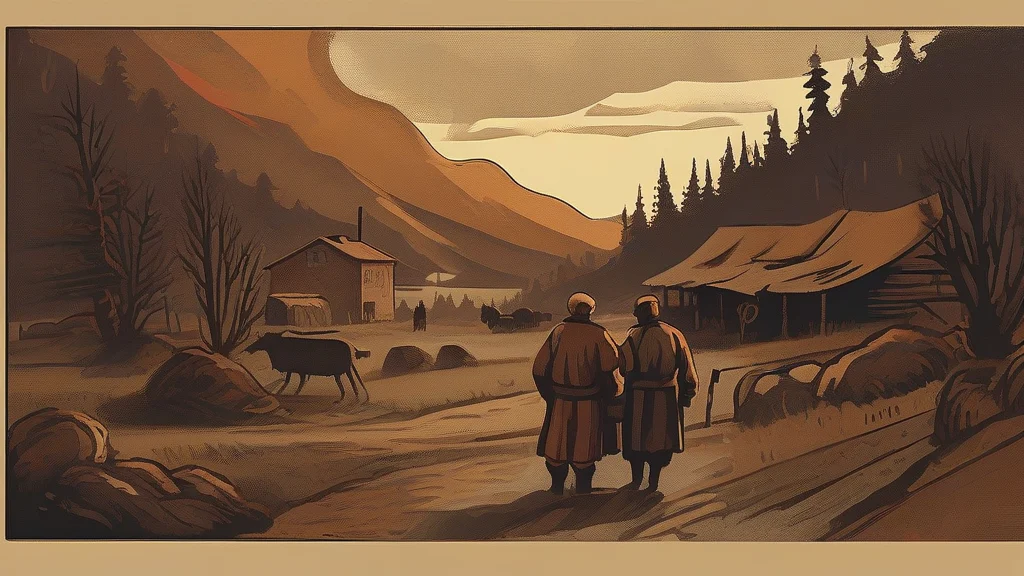
What does kulak mean?
A kulak was originally a prosperous peasant in Russia, particularly one with substantial landholdings or other property. Following the Russian Revolution and the imposition of Soviet collectivization, the word acquired a hostile political meaning: authorities used it to identify peasants considered resistant or hostile to collective farming, often confiscating their property or subjecting them to persecution. In this later sense, kulak became a derogatory term associated with class enemies, rural wealth, and opposition to Soviet agricultural policy. English also uses kulak for a village headman in parts of the former Yugoslavia, a largely separate historical usage. The word is now most informative in historical, political, and economic discussions of Russia and the Soviet period. Calling an ordinary wealthy farmer a kulak outside those contexts is generally inappropriate because the term carries a strong history of political accusation and persecution.
A prosperous Russian peasant, especially one who owned land or property; later, a peasant designated as an enemy of Soviet collectivization.
"Village records identified several families as kulaks during the collectivization period."
The pre-revolutionary sense may be historical and descriptive, while the later Soviet sense is strongly derogatory and political.
A village headman or local official in parts of the former Yugoslavia.
"Each Serbian village traditionally elected a kulak to represent it locally."
This is a regional Balkan usage and should not be confused with the Russian political sense.
The standard plural refers collectively to prosperous peasants or to people officially classified as kulaks.
"The first kulaks in the district were selected for confiscation."
A word once associated with rural prosperity became one of the Soviet state's most damaging accusations against farmers.
Reviewed by Deb Chak, Editor. AI-assisted content curated by RJS Tech Solutions LLP.
Where does kulak come from?
The English word comes from Russian kulak, literally “fist,” which was applied to prosperous or strong-handed peasants before the Russian Revolution. After the Revolution, it became a pejorative label for peasants opposed to Soviet collectivization. The related sense meaning a village headman comes from usage in the Balkans and has a separate regional history.
How kulak is actually used
In English historical writing, the word is chiefly associated with rural Russia and Soviet collectivization. In its modern political sense it is strongly derogatory and denotes a supposed class enemy; outside that historical context, it can sound like an invented label or an imprecise synonym for a wealthy farmer.
Easily confused with kulak
A kookaburra is an Australian laughing bird, whereas a kulak was a prosperous Russian peasant or the derogatory term later applied to peasant opponents of Soviet collectivization.