
What does tomb mean?
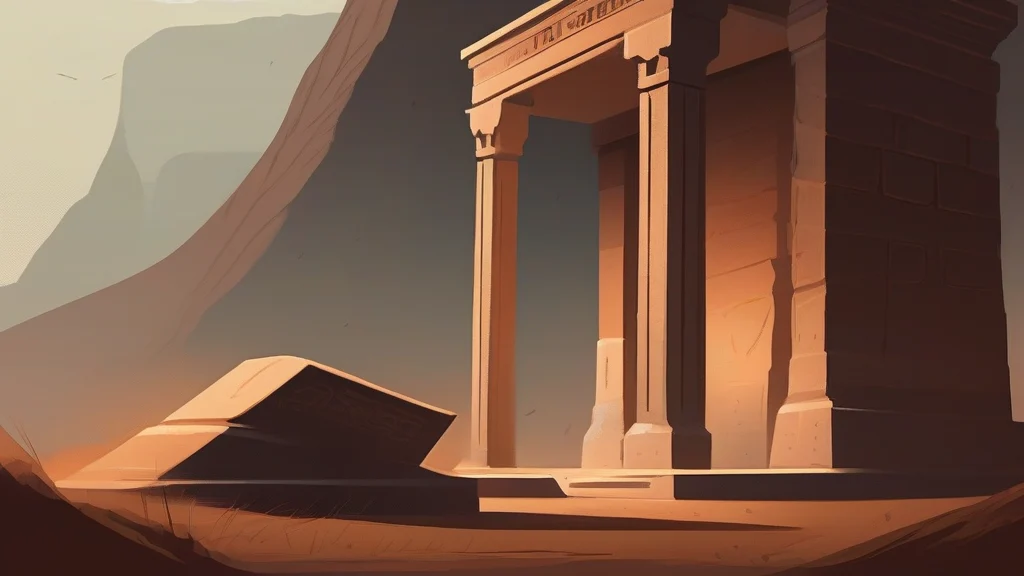
A tomb is a substantial structure built over or containing a burial place, particularly the grave of an important or historically significant person. The word often evokes ancient ruins, royal burials, archaeology, and the long concealment of the dead. A tomb may be freestanding, built into rock, or incorporated into a larger monument; unlike the more general word “grave,” it usually implies a recognizable structure rather than simply a place of burial. In literary contexts, a tomb can also symbolize death, confinement, forgotten history, or the passage from memory into silence. Although “tomb” is principally a noun, it has an uncommon literary verb meaning to bury or place a dead body in a tomb. Its distant origin in Greek gives the word a notably long history: the English form arrived through Latin and French while retaining much of the shape of its source.
A stone or masonry structure built over or containing a burial place, especially one associated with a notable or ancient person.
"The royal tomb contained richly decorated objects left beside the buried monarch."
The figurative sense denotes a place associated with death, confinement, or oblivion and is chiefly literary.
To place a dead body in a tomb; bury.
"The body was entombed beneath the chapel following the funeral ceremony."
This use is literary, archaic, or specialized and is much less common than the noun.
The standard plural is formed by adding -s. When used attributively before another noun, the form remains singular.
"The site contains the tombs of several rulers and their families."
Tomb is a linguistic traveler: Greek tymbos became Latin tumba, then French tombe, and finally English tomb.
Reviewed by Deb Chak, Editor. AI-assisted content curated by RJS Tech Solutions LLP.
Etymology of tomb
The word entered Middle English from Anglo-French tumbe, which came from Late Latin tumba. Latin tumba was borrowed from Greek tymbos, meaning “tomb” or “burial place.” French tombe, Italian tomba, and Spanish tumba are Romance cognates developed from the same Latin source.
Related word forms
How tomb is actually used
As a noun, “tomb” commonly suggests a conspicuous or historic burial structure rather than an ordinary grave. Figurative uses are literary and often convey finality, isolation, or oblivion. The verb is now literary and uncommon.