
What does television mean?
Television denotes both the technology that transmits moving images with sound and the medium through which people receive broadcasts, programs, news, and entertainment. In everyday use, it may also mean the physical television set, although “the TV” is generally more conversational in this sense. As a mass noun, television often refers to the medium as a whole: a person may criticize television, study television, or say that something appeared on television. As a count noun, “television” can identify a particular device, and “televisions” refers to multiple sets. The word has a neutral public connotation, though discussions of its effects can emphasize its persuasive, educational, entertaining, or occasionally harmful influence. It remains one of the most familiar household technologies and a major channel for shared cultural experience. Television also has historical importance: it transformed the way news, sport, drama, advertising, and political communication reached audiences in the twentieth and twenty-first centuries.
nounA system and medium that transmits moving images, usually with sound, over distances through radio waves, cable, satellite, or digital networks. The word can also refer to a television set or, collectively, to television programming.
- The medium or system through which moving images and sound are broadcast, received, or viewed.
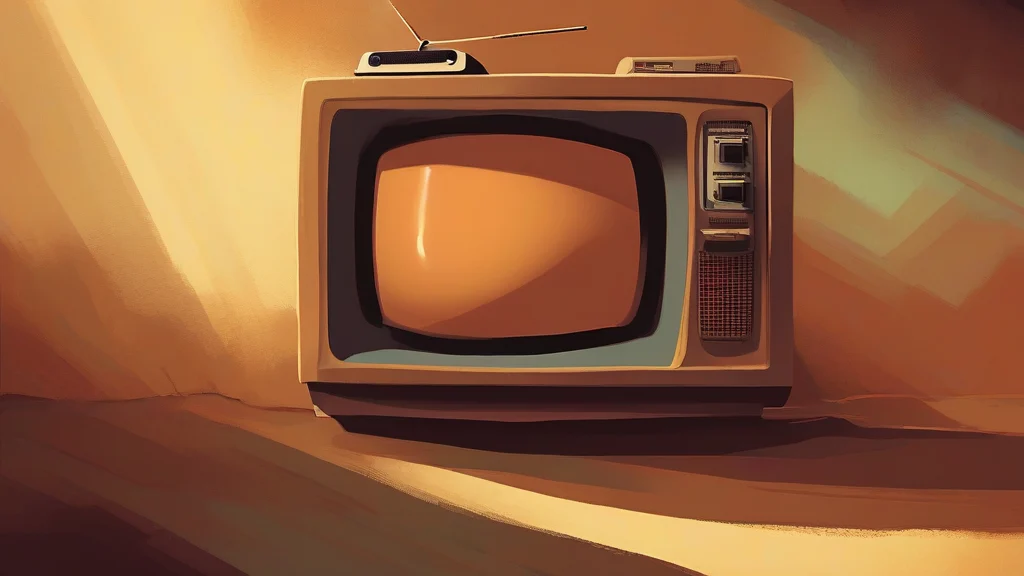
- A television set, especially when viewed as a piece of household equipment.
- Television programming considered collectively.
"She stayed up late watching a documentary about deep-sea exploration on television."
"The final match was shown live on television."
"We bought a small television for the kitchen."
"Television has become a major medium for news, entertainment, and public information."
The plural is used for multiple television sets; programming and the medium are normally treated as uncountable.
"The hotel rooms have televisions mounted on the walls."
Long before anyone changed channels with a remote control, viewers had to get up and walk to the television set.
Reviewed by Deb Chak, Editor. AI-assisted content curated by RJS Tech Solutions LLP.
Etymology of television
“Television” was coined in the 1920s for the transmission of images over a distance. It combines the Greek-derived prefix tele-, meaning “far” or “at a distance,” with vision, from Latin visio, meaning “sight” or “a seeing.” The word belongs to a wider family formed with tele-, including telegraph, telephone, and telemetry, all of which involve communication over a distance.
Related word forms
How television is actually used
The word is neutral in register and common in both British and American English. British speakers may informally use “telly” for a television set, while “TV” is widely used in both regions.
Easily confused with television
A telephone primarily transmits speech, whereas a television system transmits moving images together with sound.