
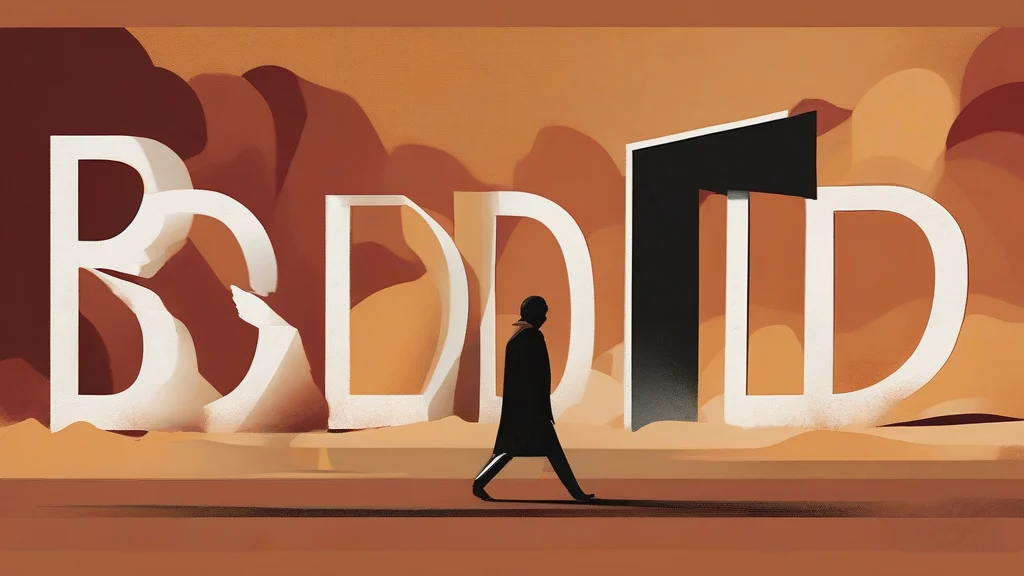
What does bold mean?
Bold is an adjective describing someone or something that is daring, confident, or unafraid of risk. Applied to people and their actions, it suggests courage and initiative — a bold leader, a bold decision, a bold attempt at something difficult. It also describes visual and sensory qualities: bold colours, bold patterns, bold flavours, and, in typography, text printed in heavier strokes than regular type, known as boldface. The connotation is usually admiring, implying bravery and self-assurance, though it can shade into criticism when boldness tips into recklessness or impudence, as in the idiom 'as bold as brass'. The word descends from Old English 'bald', meaning brave, and has kept that core sense for over a thousand years. Its derivatives include boldly, boldness, and embolden, which means to give someone the confidence to do something. Few adjectives are as versatile, serving equally well in descriptions of personality, art, cuisine, and design.
Showing courage, confidence, and willingness to take risks; also, strikingly strong or vivid in colour, design, flavour, or typography.
"The scientist proposed a bold new theory that challenged decades of accepted wisdom."
When applied to behaviour, bold can imply admirable courage or, less favourably, impudent forwardness.
A heavy weight of type, especially as used for emphasis in printed or displayed text (usually 'the bold' or 'in bold'); collectively, bold people (archaic or literary).
"Highlight the key terms and put them in bold."
In Middle English, 'bold' was so strongly associated with courage that 'to be bold' could simply mean 'to be confident' — and printers later borrowed the very word to describe text thick enough to stand out.
Reviewed by Deb Chak, Editor. AI-assisted content curated by RJS Tech Solutions LLP.
Etymology of bold
Bold comes from Old English 'bald', meaning brave, confident, or daring, which traces back through Proto-Germanic roots shared with related words such as Dutch 'boud' (meaning bold or saucy). The sense has remained remarkably stable across more than a millennium of English. In typography, 'bold' came to denote heavy type in the era of letterpress printing, extending the idea of something visually forceful.
Related word forms
How bold is actually used
'Bold' is neutral-to-positive when describing courage, though it can carry a hint of recklessness ('bold to the point of foolish'). In typography, 'bold' refers specifically to heavier-than-regular type weight. The idiom 'as bold as brass' describes shameless audacity.
Easily confused with bold
'Bald' describes having little or no hair on the head, while 'bold' means courageous, daring, or visually striking — the two differ by only a single letter.