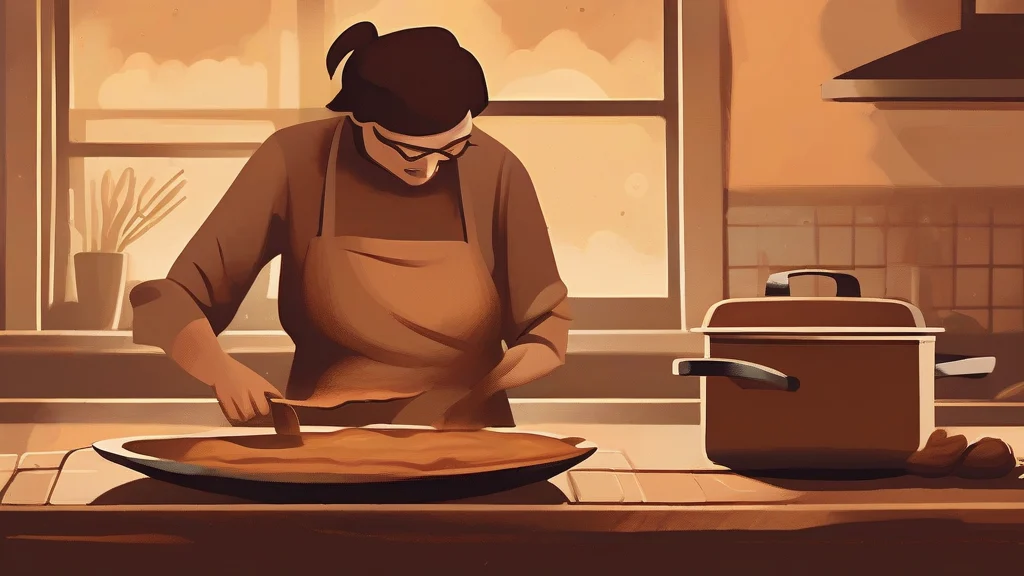
What does browned mean?
"Browned" is the past tense and past participle of the everyday verb "brown," which means to make or become brown. Its most familiar use is culinary: food is browned when its surface is heated until it turns a golden-brown color — searing meat, toasting bread, or caramelizing onions — a process prized because it develops rich, savory flavors through chemical reactions between amino acids and sugars. Beyond the kitchen, "browned" can describe skin darkened by sun exposure, paper or metal discolored by age or oxidation, and any surface that has taken on a brown hue. As an attributive adjective, it appears in common phrases such as "browned butter" and "perfectly browned." The word derives from "brown," an Old English color term with cognates across the Germanic languages and relatives like "brunette" from French. In British English, the related informal expression "browned off" means irritated or fed up.
Past tense and past participle of "brown": to have made or become brown in color, especially through cooking, heating, or exposure to the elements.
"The chef browned the meat thoroughly before adding it to the stew."
Most commonly used of food preparation; also used of skin tanned by sunlight or surfaces discolored over time.
Having a brown surface or color, especially as a result of being cooked, toasted, tanned, or aged.
"Serve the perfectly browned cutlets immediately with lemon wedges."
That irresistible crust on a perfect steak has a name: the Maillard reaction — the chemistry that makes food "browned" taste so much better than merely cooked.
Reviewed by Deb Chak, Editor. AI-assisted content curated by RJS Tech Solutions LLP.
Etymology of browned
The word derives from "brown," an Old English color term (brūn), which traces back through Proto-Germanic to the same root that gave French brun and its derivatives such as brunette. The verbal form "to brown" developed naturally in Middle English, and "browned" emerged as its regular past tense and past participle. Its Germanic cognates include German braun and Dutch bruin.
Related word forms
How browned is actually used
"Browned" is neutral to positive in cooking contexts, where browning signals flavor development; in describing skin, it typically refers to sun tanning. The chiefly British idiom "browned off" (annoyed) uses the word figuratively and should not be confused with culinary use.
Easily confused with browned
"Browned off" is a British informal phrase meaning annoyed or fed up, whereas "browned" alone refers to color change or cooking.
"Burned" means damaged or destroyed by excessive heat, while "browned" describes a desirable golden-brown surface, as in properly cooked food.