
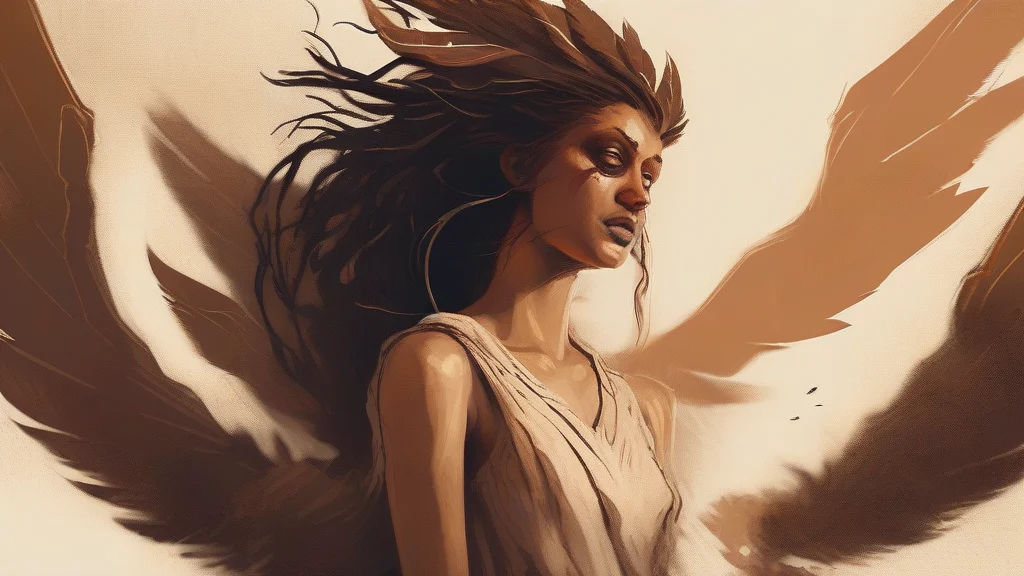
What does harpy mean?
A harpy is, first, a creature from Greek and Roman mythology: a winged monster with the face of a woman and the body, wings, and talons of a bird. Ancient writers cast harpies as snatchers who seized food, stole people away, or acted as agents of divine punishment, and they feature in the story of Phineus and in Virgil's Aeneid. From the myth, English developed a figurative meaning, a harsh, grasping, or shrewish woman, and this is how the word is now most often met. That use is insulting. It suggests a person who is predatory, nagging, or greedy, and it carries a gendered sting that many speakers now avoid. The word also survives in natural history as the harpy eagle, a very large rainforest raptor of Central and South America. Harpy is a useful word because it joins classical mythology, literary allusion, and everyday insult, and knowing its origin explains why it suggests both a bird of prey and a person who preys on others.
nounIn Greek and Roman mythology, a rapacious monster with a woman's face and a bird's body. By extension, a cruel, grasping, or shrewish woman.
- A cruel, greedy, or shrewish woman (figurative, derogatory).
- A mythological monster with a woman's face and a bird's body and claws.
- A rapacious or predatory person of either sex (figurative).
"The old novel cast the landlady as a harpy, forever swooping down on her tenants for the rent."
"In the Aeneid, the harpies foul the Trojans' feast and prophesy hardship to come."
"The columnist dismissed her critics as harpies, a word that says more about his attitude than about their arguments."
Regular plural, formed by changing -y to -ies. It is used for the mythological creatures and for the figurative sense.
"The harpies of Greek myth were often depicted as swift, screeching birds with the faces of women."
The Greek name Harpyiai means 'snatchers', and the same creature also gave its name to the harpy eagle, one of the largest and most powerful eagles in the world.
Reviewed by Deb Chak, Editor. AI-assisted content curated by RJS Tech Solutions LLP.
Where does harpy come from?
Harpy entered English in the late Middle English period, borrowed from Old French harpie and ultimately from Latin harpyia. The Latin word came from Greek Harpyiai, meaning 'snatchers', a name connected to the Greek verb harpazein, 'to seize'. The figurative sense of a rapacious or shrewish person developed in English from the mythological monster.
Related word forms
How harpy is actually used
In its mythological sense the word is neutral and literary. In its figurative sense it is strongly derogatory and is applied almost exclusively to women, so many writers now regard it as sexist. It is more common in writing than in speech and often has a dated or theatrical flavor.
Easily confused with harpy
A harpist is someone who plays the harp, whereas a harpy is a mythical bird-woman monster or a figuratively spiteful woman.
A harridan is a bad-tempered, domineering old woman, while a harpy originally names a mythological predator and carries an added sense of greed or rapacity.