
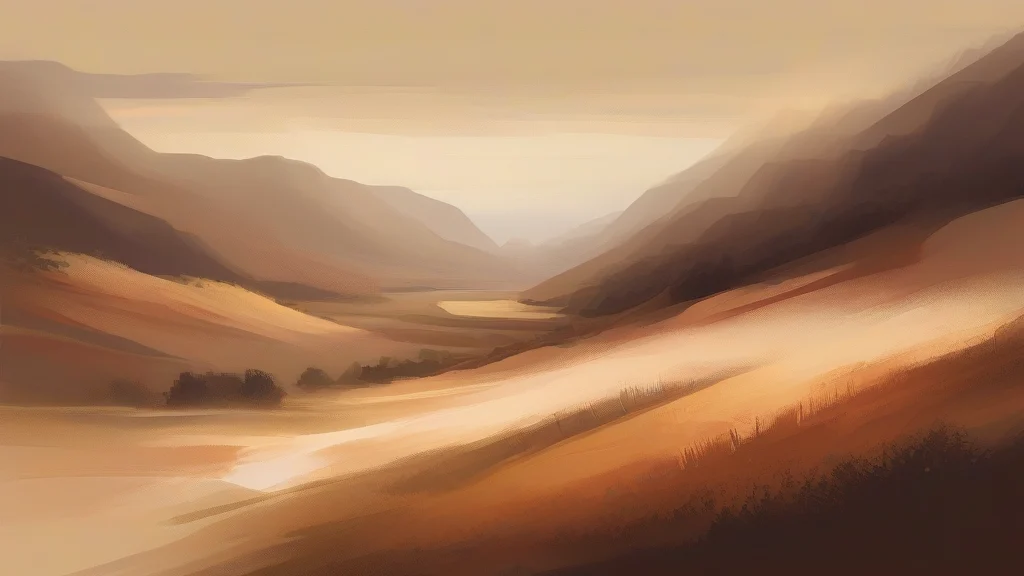
What does landscape mean?
A landscape is a view or representation of the natural features of an area, including its land, hills, vegetation, water, and overall scenery. The term can refer both to the physical environment itself and to an artistic depiction of it, such as a painting or photograph. It also has an important figurative use: a political, economic, or cultural “landscape” is the broad set of conditions, relationships, and opportunities within a particular field. In visual and technical contexts, landscape describes a horizontal format, contrasting with portrait orientation. The word is useful because it moves naturally from describing physical surroundings to describing the shape of a complex situation, without requiring the awkwardness of a more specialized metaphor.
The natural features of an area of land considered as a whole, or a depiction of those features.
"They stopped beside the road to admire the rugged landscape."
When referring to a broad area and its visible character, this is the usual general term. “Scenery” may be preferred when emphasizing visual appeal.
The general character, structure, or conditions of a field, situation, or area of activity.
"New technology is rapidly changing the landscape of modern education."
This figurative sense is common in formal writing about politics, business, culture, and social change.
A horizontal format or arrangement, especially of an image, screen, or page.
"The photograph was displayed in landscape orientation."
The plural is used for separate views or depictions of scenery and for different figurative fields, organizations, or arrangements.
"The region is known for its dramatic coastal landscapes."
From a Dutch word meaning “land-shape,” landscape began as a picture of the land before it became a metaphor for every kind of human landscape.
Reviewed by Deb Chak, Editor. AI-assisted content curated by RJS Tech Solutions LLP.
Where does landscape come from?
The word entered English in the 17th century from Dutch landschap, meaning “landscape” or literally “land-shape.” Its components reflect this history: Dutch land means “land” or “region,” while -schap is a suffix forming words relating to a condition, state, or collective body. The same Germanic elements are visible in related forms such as German Landschaft and Scandinavian landskab or landskap, all referring to a region or its scenery.
How landscape is actually used
The word is common in British and American English. In figurative uses, “landscape” often suggests the broad structure or changing conditions of a field, organization, or situation, and is typically used in formal contexts such as politics, business, or education.
Easily confused with landscape
Landscape refers to the land and its natural features as a whole, while scenery often emphasizes the visual appearance of a place, especially in a landscape painting or view.
In the sense of horizontal or vertical layout, landscape describes the format or position of an image or object; orientation describes its broader alignment or arrangement.