
What does pheasant mean?
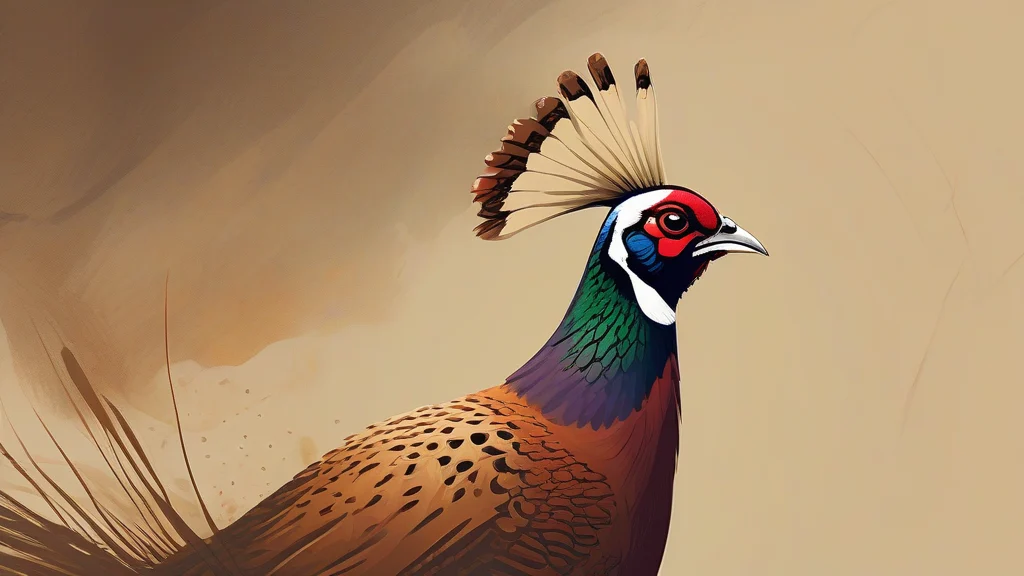
A pheasant is a large game bird recognized by its robust body, often vivid male plumage, and long tail. The best-known species, the common pheasant, was originally native to parts of Asia but was introduced widely into Europe, including Britain, and later into North America and other regions. Pheasants are hunted in some places and are also cooked as food. In ordinary language, “pheasant” most often refers to the living bird, while the word can also mean its flesh when served as a meal. The term should not be confused with “peasant,” which refers to a rural agricultural worker or smallholder. “Pheasant” is especially useful in wildlife, culinary, and historical contexts because it identifies a distinctive group of game birds and evokes traditions of country estates, hunting, and formal game cuisine.
nounA large, long-tailed game bird of the pheasant family, native mainly to Asia and introduced into many other regions. It is valued as game and as food.
- A large, often brightly colored game bird belonging to the pheasant family.
- The flesh of this bird when served as food.
"The pheasant displayed an iridescent blue-green head and a long, barred tail."
"A pheasant flew across the field and disappeared into the hedgerow."
"The menu featured roast pheasant with root vegetables."
The standard plural is “pheasants,” used for both multiple birds and, in culinary contexts, the flesh of the birds.
"The hunters returned with two pheasants."
The pheasant’s name preserves a journey from the ancient Greek world: it comes from the River Phasis, where the birds were famously abundant.
Reviewed by Deb Chak, Editor. AI-assisted content curated by RJS Tech Solutions LLP.
Etymology of pheasant
The English word comes through Old French “faisan” from Latin “phasianus,” a form associated with the Greek word “phasianos,” meaning “of the Phasis.” The Greek name referred to the River Phasis in ancient Colchis, where the bird was known to occur. The bird was introduced into Britain by the Romans, and its modern distribution reflects both that ancient introduction and later transplantation to other regions.
How pheasant is actually used
“Pheasant” is standard in British and American English. When referring to the bird itself, it normally takes the plural “pheasants.” The word can also denote the bird as food, especially in formal or traditional culinary contexts.
Easily confused with pheasant
A pheasant is a bird, whereas a peasant is traditionally a rural agricultural worker or smallholder.