
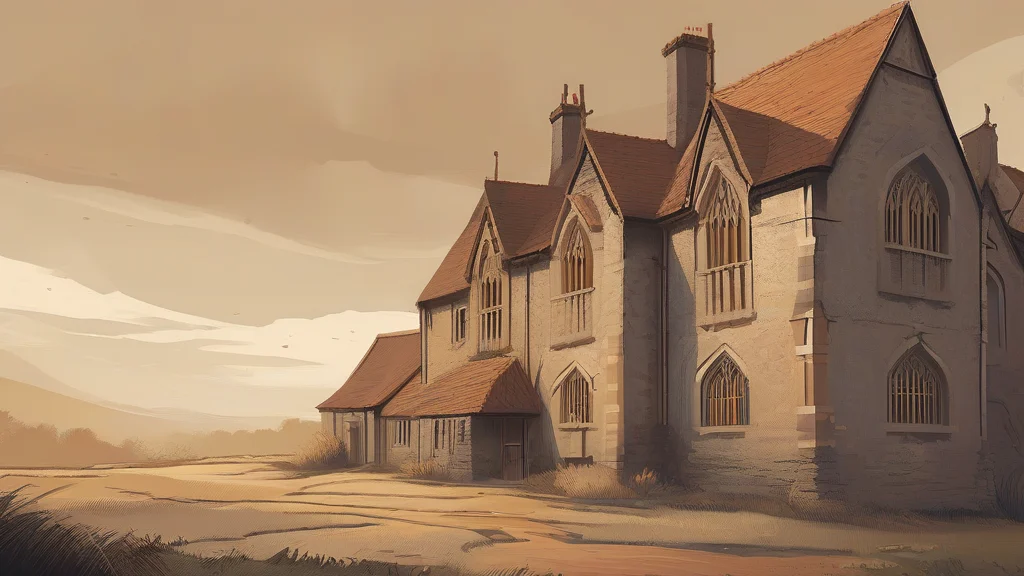
What does priory mean?
A priory is a religious community headed by a prior, or the buildings in which such a community lives. It differs from a monastery mainly in its leadership: a priory is governed by a prior, while a monastery may have a superior, abbot, or other form of governance, and an abbey is specifically associated with an abbot. In Britain, the word is now especially common when referring to the surviving buildings of a former religious house, many of which have become museums, churches, country houses, or heritage sites. The term is also used in the names of historic buildings, such as priory churches and museums. Although a priory can refer to a functioning community today, most modern references concern medieval foundations and their remains. The word has a strongly historical and British character, even when the institution itself originated during the medieval period.
nounA religious community under the leadership of a prior, or the building or complex in which such a community lives. The term is especially common in Britain for former monastic institutions that are now used as buildings or historic sites.
- A religious community governed by a prior.
- The building or complex housing such a community.
- A former religious house or its surviving buildings, especially in Britain.
"The medieval priory was converted into a museum after the religious community left."
"The priory was founded in the twelfth century for a community of Augustinian canons."
"Visitors can explore the ruined priory, which now forms part of the historic town centre."
The plural is priories.
"Several ruined priories survive in the surrounding countryside."
Many of Britain’s best-known “ruins” are not the remains of ruined abbeys, but priories: religious houses led by a prior rather than an abbot.
Reviewed by Deb Chak, Editor. AI-assisted content curated by RJS Tech Solutions LLP.
Etymology of priory
The word comes through Anglo-French and Old French from the Latin prioria, meaning a priory or the office or estate of a prior. The underlying Latin prior, meaning “a superior” or “the first,” was originally used in religious communities for a local leader and was borrowed into English in that sense. The English form priory developed in the medieval period and was later extended to refer to the buildings occupied by such a community.
Related word forms
How priory is actually used
The word is most common in British English and in historical, architectural, and heritage contexts. In everyday use, it often refers to the surviving building or site of a former religious community.
Easily confused with priory
A monastery is the general term for a religious community or its dwelling place, while a priory specifically denotes a community or house led by a prior.
An abbey is generally associated with an abbot, whereas a priory is associated with a prior; the distinction can vary according to the community and its religious order.