
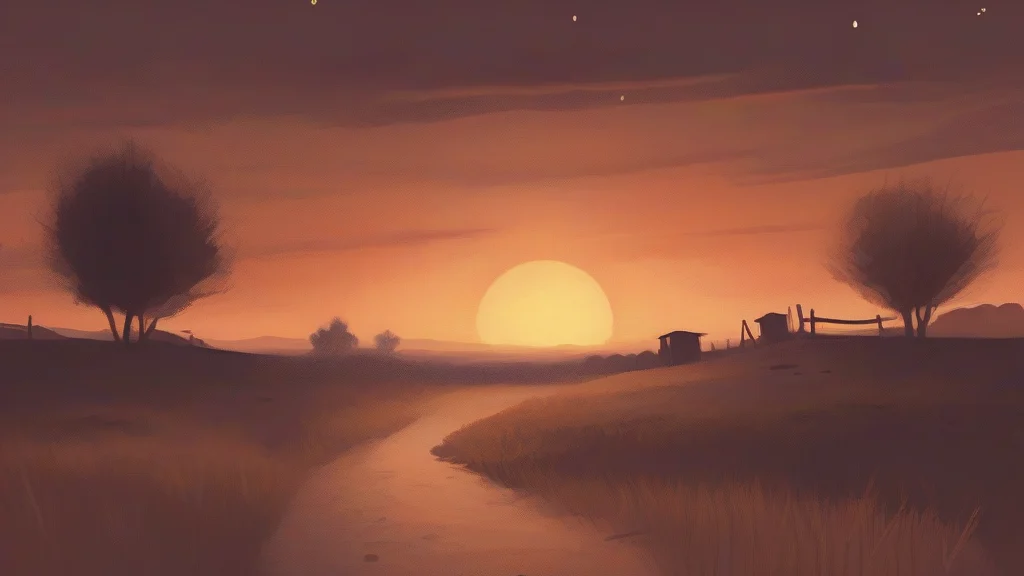
What does twilight mean?
Twilight denotes the dim, softened light that follows sunset and precedes full darkness, as well as the transitional period itself. In ordinary use, it evokes calm, beauty, and the fading boundary between day and night, which explains why it appears frequently in descriptions of landscapes, seasons, and emotional moods. Its figurative use is also well established: a “twilight” in a life or career is a period of gradual change, decline, or uncertainty, while “twilight years” commonly refers to later life, particularly old age. The word combines a precise literal meaning with a broader symbolic one, making it more evocative than a simple term such as “evening.” Although “dusk” can be used in similar contexts, “twilight” often gives a stronger impression of fading light and transition. The word is understood throughout British and American English.
The dim or soft light occurring after sunset and before full darkness; a transitional period between day and night.
"They walked home through the quiet twilight."
The noun is widely used in descriptive and literary contexts.
Denoting or relating to twilight; dim, shadowy, or indistinct.
"A twilight landscape stretched beyond the road."
The adjective is relatively uncommon and is mainly literary or poetic.
The plural is uncommon, but can refer to separate periods of twilight or to figurative stages of transition.
"The memoir evokes the different twilights of a life spent traveling."
Twilight literally means “two-light,” a fitting name for the luminous space between day and night.
Reviewed by Deb Chak, Editor. AI-assisted content curated by RJS Tech Solutions LLP.
Where does twilight come from?
The word comes from Old English twi-, meaning “two” or “double,” combined with lēoht, meaning “light.” The compound referred to half-light, the dim interval between sunset and complete darkness. The modern form developed through Middle English, retaining both the compound sense and the association with a transitional period.
How twilight is actually used
Twilight is common in descriptive and literary writing. It often conveys a quiet, reflective, mysterious, or transitional atmosphere, while “dusk” is generally more neutral and more specifically tied to the time immediately following sunset. There is no significant regional difference between standard British and US usage.
Easily confused with twilight
Dusk specifically refers to the period immediately after sunset, whereas twilight can describe the dim light and transitional period more broadly and often has a more poetic or atmospheric tone.