
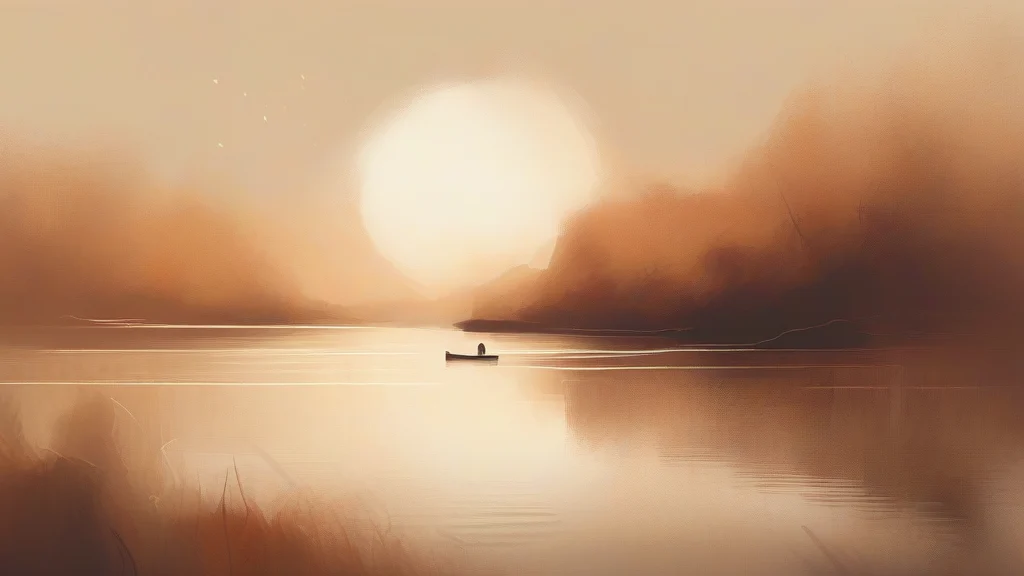
What does serene mean?
Serene describes something that is calm, peaceful, and free from disturbance or emotional turmoil. It is often used of landscapes, weather, atmospheres, and expressions, as in a “serene lake” or a “serene smile,” but it can also characterize a person who remains composed in difficult circumstances. The word has a formal, elevated tone and suggests not merely the absence of noise or activity, but a sense of stillness and emotional balance. Its connotations are generally positive, although “serene” may sometimes imply that a person or situation is unusually untroubled by problems that might normally cause concern. The related noun “serenity” is more common than the rare noun use of “serene” itself. Serene is a useful word when a description needs to convey both outward tranquility and inward calm.
Free from disturbance, emotion, or turmoil; calm, peaceful, and untroubled.
"The island remained serene despite the approaching storm."
Commonly used in formal or literary description for people, places, natural settings, atmospheres, and expressions.
A state of calmness, peacefulness, or tranquility.
"He found a rare serenity in the stillness of the hills."
Rare and literary; the more usual noun form is serenity.
Rare and literary; this plural is uncommon, and the more usual noun form is serenity.
"Moments of solitude offered him the serenes he sought."
Serene has a sky-high origin: Latin serenus could describe both a clear expanse and an untroubled mind.
Reviewed by Deb Chak, Editor. AI-assisted content curated by RJS Tech Solutions LLP.
Etymology of serene
English borrowed serene in the early 16th century from Latin serenus, meaning “clear, calm, or untroubled.” The Latin adjective is also the source of serenity and is related to the musical terms serenata and serenade, which developed through Italian and French.
Related word forms
How serene is actually used
Serene is especially common in formal, literary, and descriptive writing. It can describe people, places, landscapes, atmospheres, and expressions; the noun is much rarer and usually literary.