
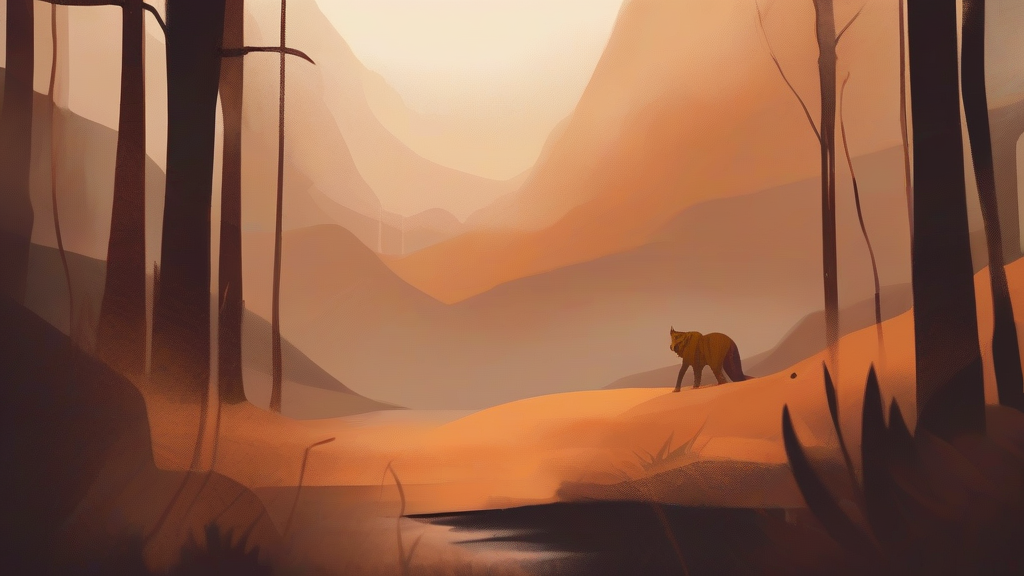
What does wild mean?
Wild describes what is free from human control, including animals that have not been domesticated, plants growing without cultivation, and land left in a natural or overgrown condition. It also conveys intensity and lack of restraint: a wild storm is violently uncontrolled, a wild guess is unpredictable, and a wild reaction is sudden and enthusiastic. The adjective can be approving when it suggests freedom, energy, or excitement, as in “a wild celebration,” but negative when it suggests danger, disorder, or recklessness. In informal use, wild can mean “very,” especially in phrases such as “wildly expensive” or “a wild success.” As a noun, “the wild” means a natural environment or wilderness, while “the wilds” refers to remote, uncultivated regions. The word is common in both British and American English, with the adverbial use being especially associated with informal American speech.
Untamed, uncontrolled, natural, uncultivated, or, figuratively, extreme and unrestrained.
"The island is home to wild ponies and rare birds."
The meaning varies by context: “wild plants” refers to uncultivated growth, “wild weather” to severe or turbulent conditions, and “wild with excitement” to intense enthusiasm.
The natural, uncultivated state or condition of life, especially outside human settlement or control.
"The expedition disappeared into the wilds of northern Canada."
Usually appears in the phrase “in the wild” or in the plural “the wilds.”
Informally, very or to an extreme degree; also, in an uncontrolled or enthusiastic manner.
"The small café became wildly popular after a food critic praised it."
The informal intensifying use is especially common in contemporary American English.
To make or become wild; to grow or develop without control, cultivation, or restraint.
"The neglected gardens gradually wilded into dense thickets."
This is less common than the adjective and noun uses and is often literary or descriptive.
The plural is used especially for remote, uncultivated regions: “the wilds.” The singular form “the wild” is also common.
"The film follows a group of explorers stranded in the wilds."
Wild began by describing what was beyond human control—untamed animals, uncultivated land, and forces that could not be easily contained.
Reviewed by Deb Chak, Editor. AI-assisted content curated by RJS Tech Solutions LLP.
Etymology of wild
Wild comes from Old English wilde, an adjective meaning untamed, uncontrolled, or uncultivated. It is cognate with related forms in other Germanic languages, including German wild and Dutch wild, and the English words “wilderness,” “wildness,” and “wildly” continue its native Germanic lineage. Later figurative uses extended the word from untamed animals and uncontrolled natural settings to intense feelings, unpredictable behavior, and enthusiastic excitement.
Related word forms
How wild is actually used
As an adverb, “wild” is informal and especially common in American English, though it is also used in British English: “That was a wild success.” As an adjective, it can be affectionate or approving when describing someone enthusiastic and uninhibited, but it may sound disapproving when describing careless or extreme behavior. In the phrase “in the wild,” it refers to an animal, plant, or population living under natural conditions rather than in captivity or cultivation.
Easily confused with wild
Wild means untamed or uncontrolled, whereas a wile is a deceptive trick or stratagem.